

Enterprise Vibe Coding: The Shift from Technical Complexity to Managed Intent
4 Min Read

March 4, 2026
In the modern development landscape, a new phenomenon is taking over: Vibe Coding. This approach is built on the idea that you can describe the flow, feel, and desired outcome of a project using natural language. Once you provide the "vibe" of what you want, the AI takes over the build process. This method has gained popularity because it eliminates the "blank page" syndrome and the syntax errors typical of traditional coding. Instead, it replaces technical hurdles with pure human intent.
But while building a personal golf-tee-time bot via "vibes" is great for a weekend project, the stakes are different when you're an HR director in a state agency or a dean at a major university. You need that same intuitive simplicity, but you can’t afford for your AI to go "off the rails" with your data.
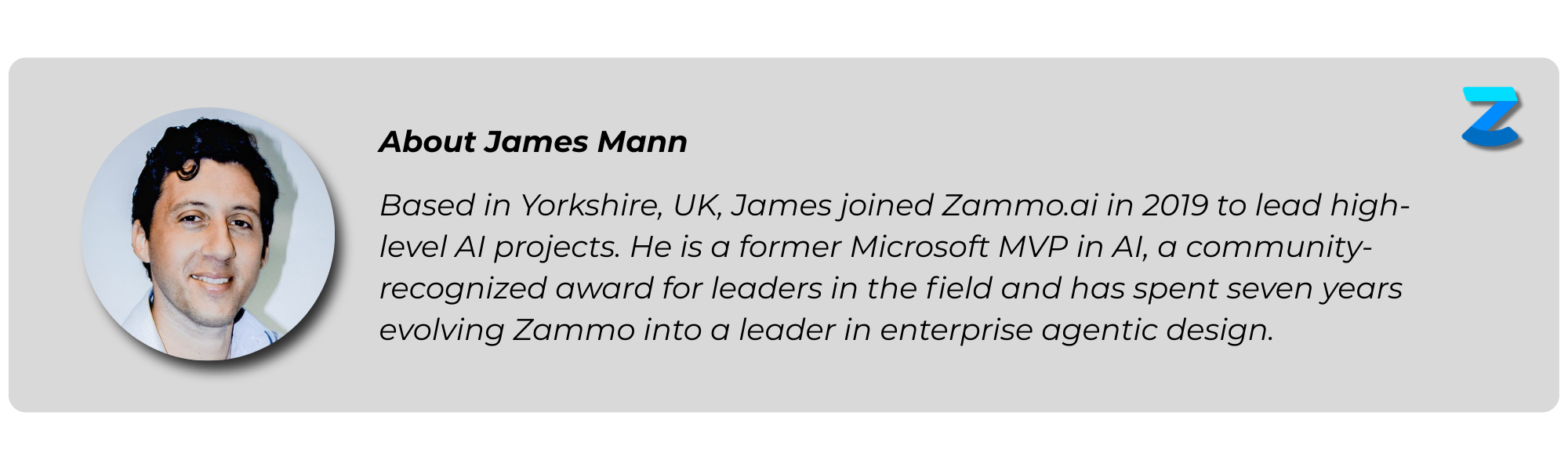
I sat down with James Mann, Platform Engineer at Zammo.ai and a former Microsoft MVP in AI. As a seven-year veteran of the company, James shared how Zammo is bringing the "Vibe Code" philosophy to the enterprise without the enterprise-sized risks.

Why Designing Agents No Longer Requires an Engineer
For years, building AI agents was a high-code, highly technical endeavor. Even with low-code tools, you still needed a deep understanding of workflow logic and infrastructure. James believes that the biggest hurdle wasn't the execution, it was the design.
"The hardest part of actually building agents isn't executing them; it's designing them," James says. "You typically need someone who's quite technically savvy to do that. What we’re trying to do is make it accessible... so that non-technical users can do it through a streamlined experience where they describe what they want".
The "Consultant" Experience: A Meta-Agent for Design
At the heart of Zammo is what James calls a "Meta-Agent" experience. While most competitors focus only on the agent the end-user talks to, Zammo built an agent, the Consultant, whose sole job is to help business users design their own automations.
"It's exactly the same idea as vibe coding," James notes. "The difference is that vibe coding is often 'off the rails.' We allow business users to do that same exercise but in a managed way".
When a business user says, "I want to connect to ServiceNow to create incident tickets," the Consultant doesn't just wait for a developer to hook up an API. It interprets the request, asks clarifying questions like a human analyst would, and then auto-generates the API integration plan itself.

The Zammo Differentiator: Security in the "Vibe"
The reason most "vibe coding" tools stay in the hobbyist realm is a lack of governance. Zammo bridges this gap by offering:
On-Tenant Infrastructure: Unlike "wrappers" that sit on top of a third-party site, Zammo can deploy the entire infrastructure into the customer’s own Azure tenant. This ensures that every automated interaction stays within the customer's isolated, secure environment.
Built-in Governance: Enterprise-grade auditing, version control, and analytics are baked into the platform, not added as an afterthought.
Omnichannel Reach: Because Zammo is a full enterprise system (not just an LLM wrapper), these sophisticated agents are instantly available across SMS, Telephony, Teams, and Slack.
What’s Next: From Building to Supervising
As we looked toward the next three to five years, James described a future where the human role shifts from "builder" to "supervisor".
"Right now, we create an agent for a specific use case," James explains. "In the future, agents will detect demand autonomously. If there is a sudden demand for a specific product or service, the system could self-build an agent to handle it". This Multi-Agent Orchestration means agents won't just follow a script; they will recognize complex problems and "give work" to specialist sub-agents to solve them without human intervention, all while staying within the managed environment.
The Bottom Line
Zammo is proving that "easy to use" doesn't have to mean "unsecure." By taking the complexity out of the design phase, they are empowering the people who know the business best to build the tools they need most.
As James puts it: "We have a platform that makes it easy to design, safe to operate, and cheap to scale".
Want to see your use case live? Request a no-cost custom demo today and see it live tomorrow!